House Lifting in Galveston, TX
Galveston Island sits almost entirely within FEMA-designated Special Flood Hazard Areas (SFHA). For the roughly 50,000 residents who live here, house lifting is not a luxury — it is often the single most effective investment a homeowner can make to protect property value, reduce flood insurance premiums, and survive the next major storm.
TerraFirm Leveling is a locally based house lifting contractor with offices at 2108 26th St, Galveston, TX 77550. We understand Galveston’s building codes, FEMA flood zones, historic home construction, and Gulf Coast soil conditions better than any out-of-town crew.
Why Galveston Homes Face Unique Flooding Risk
Geography and Elevation
Galveston Island averages less than 7 feet above mean sea level — with large portions of the western end of the island below 5 feet. The island’s highest natural point barely exceeds 8.7 feet. That means even moderate Gulf surges overwhelm ground-floor living spaces with zero margin for error.
FEMA Flood Zone Classifications
According to FEMA Flood Insurance Rate Maps (FIRMs), the vast majority of Galveston is mapped as Zone AE or Zone VE — the highest-risk flood classifications. Zone VE properties face coastal wave action in addition to flooding, creating additional structural uplift loads that ground-level homes cannot withstand.
- Zone VE — coastal high hazard with breaking wave action
- Zone AE — high hazard with defined base flood elevation
- Zone X (shaded) — moderate risk, 0.2% annual chance flood
FEMA’s Base Flood Elevation (BFE) values in Galveston typically range from +8 to +14 feet NAVD88, depending on location. Homes built before the current FIRMs were adopted in 2012 are frequently 4 to 8 feet below the required BFE.
Hurricane Preparedness & Ongoing Flood Risk
As of September 2026, Galveston County officials continue to urge residents to review their hurricane season preparedness and flood risk. While the area has avoided major storm impacts so far this year, local emergency management emphasizes the importance of ensuring homes meet current FEMA elevation guidelines. With the Texas Gulf Coast still in hurricane season, now is the ideal time to confirm your home’s elevation status and take proactive steps to reduce flood risk and insurance costs. Elevation remains a vital strategy for safeguarding your property from unpredictable Gulf Coast weather and future storms.
The Impact of Hurricane Ike (2008)
Hurricane Ike made landfall at Galveston Island on September 13, 2008, as a Category 2 storm with a storm surge estimated at 15 to 20 feet along the Bolivar Peninsula and 10 to 12 feet across much of Galveston Island. Ike caused approximately $30 billion in damage across Texas — the costliest natural disaster in Texas history at the time. More than 70,000 structures were damaged or destroyed in Galveston County.
The post-Ike rebuilding programs funded by the Texas General Land Office through CDBG-DR grants specifically prioritized elevation of existing homes as the primary mitigation strategy. Thousands of Galveston homes were raised under programs like the Ike Disaster Recovery elevation program, and communities learned that lifted homes typically suffered far less damage than their non-elevated neighbors.
Coastal Soil Subsidence
The Texas Gulf Coast is experiencing measurable land subsidence. Harris and Galveston counties have recorded subsidence rates of 0.5 to 2.5 inches per year in some areas, driven by historic groundwater withdrawal and natural sediment compaction. Over 20 years, a home can effectively sink 2 to 5 additional feet relative to sea level — even before accounting for sea level rise. Lifting a home corrects for cumulative subsidence and positions it for the decades ahead.
What TerraFirm Leveling Does for Galveston Homeowners
Structural Elevation Lift
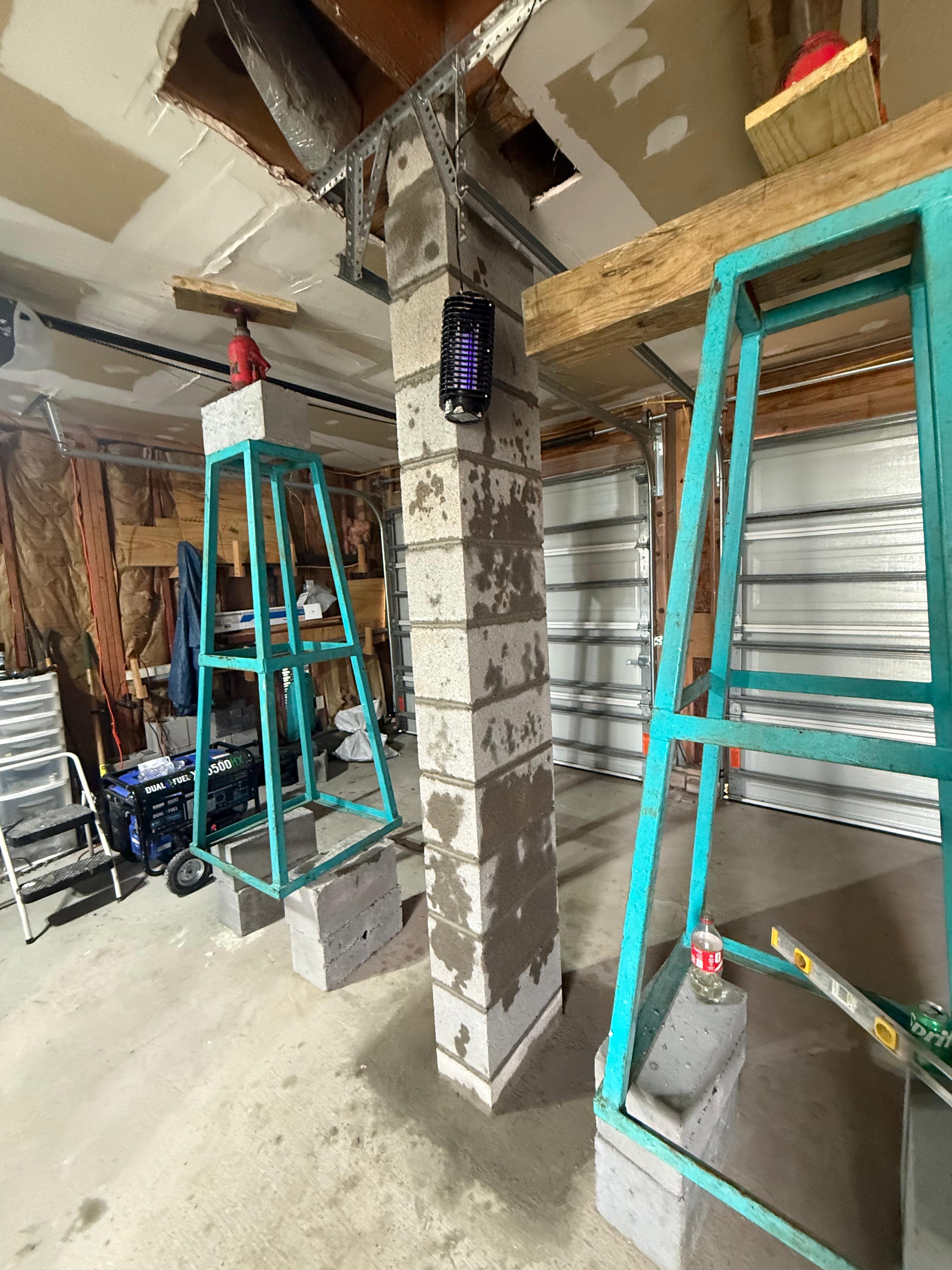
We raise your home using engineered Unified Hydraulic Jacking Systems — a synchronized network of hydraulic cylinders that lift the entire structure simultaneously, preventing differential stress on walls, floors, and roof framing. Whether your home is pier and beam, slab-on-grade, or a historic Victorian structure, we develop a custom lift plan reviewed by a licensed structural engineer.
New Piling Installation
After lifting, most Galveston homes require new structural support. We install:
- 12×12 pressure-treated timber pilings jet-set to refusal depth
- Concrete cast-in-place piers
- CMU block pier systems for historic restoration compatibility
- Anchor bolt systems meeting current wind uplift requirements
- Termite shields and moisture barriers
Piling depth is specified by a licensed engineer based on soil boring data, ensuring long-term stability in Galveston’s sandy, high-water-table soil conditions.
FEMA Elevation Compliance
We coordinate directly with licensed civil engineers and elevation certificate surveyors to ensure your finished home meets or exceeds FEMA BFE requirements. Our process includes:
- Pre-lift engineering review and permit preparation
- City of Galveston building permit coordination
- Structural engineering letters as required
- Post-lift elevation certificate from a licensed land surveyor
- Final city inspection coordination
Flood Insurance Savings
Elevating your home can produce dramatic reductions in NFIP (National Flood Insurance Program) flood insurance premiums. FEMA’s rating system is highly sensitive to the difference between a building’s lowest floor elevation and the community’s BFE:
| Feet Above BFE | Approximate Annual Premium Reduction |
|---|---|
| 1 foot above BFE | ~30–45% |
| 2 feet above BFE | ~50–65% |
| 3+ feet above BFE | ~70–80%+ |
On a home currently carrying a $4,000/year NFIP policy, elevating to 3 feet above BFE could reduce the annual premium by $2,800 or more. Over 10 years, the premium savings often offset a significant portion of the lift cost.
Historic Homes on Galveston Island
Galveston is home to one of the largest concentrations of Victorian-era architecture in the United States. The island’s historic district contains more than 1,500 buildings listed on the National Register of Historic Places or contributing to Galveston’s historic districts. Many of these homes were built on original pier and beam systems dating to the late 1800s and early 1900s.
Lifting a historic Galveston home requires a specialized approach:
- Pre-lift structural documentation — photographic and measured records of all existing conditions
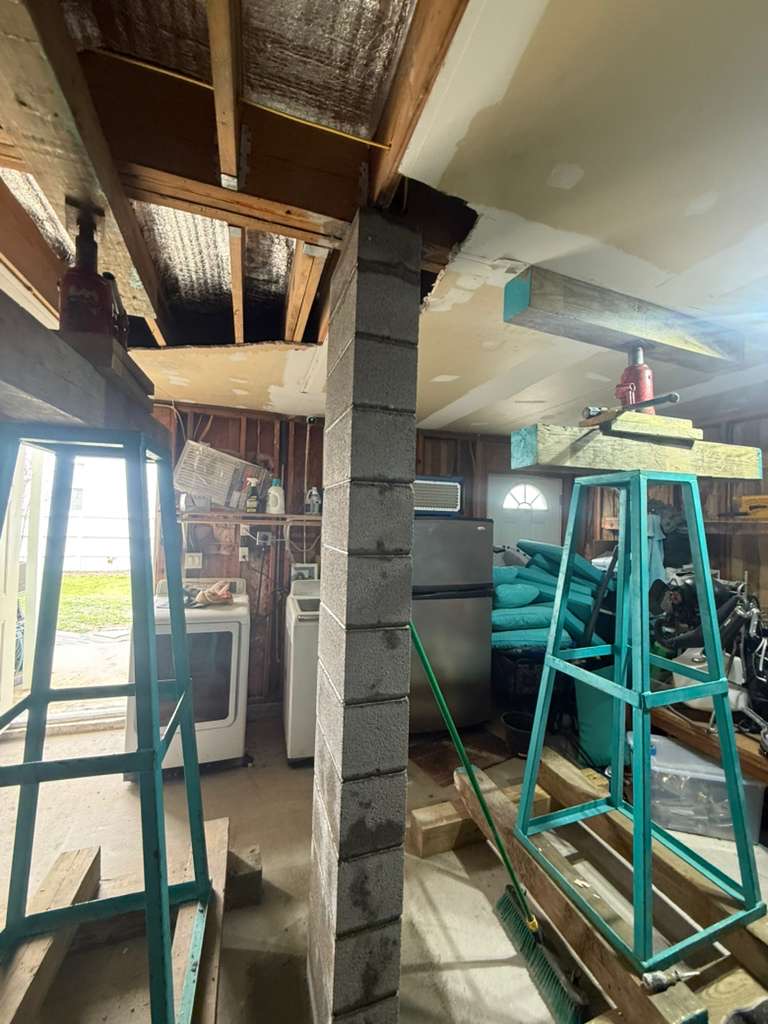
- Careful cribbing — temporary support systems designed to avoid stress cracking in older wood-frame construction
- Galveston Historic Preservation manual compliance — we work with the Historic District staff to ensure compliance with Secretary of the Interior Standards
- Original siding and trim protection — blocking and bracing to prevent racking damage during the lift
TerraFirm Leveling has completed elevation projects on historic Galveston properties in the East End Landmark District, Silk Stocking District, and Lost Bayou Historic District.
Service Areas Beyond Galveston Island
We serve homeowners throughout the greater Galveston Bay region:
- Bolivar Peninsula — Crystal Beach, High Island, Port Bolivar
- League City, Friendswood, Dickinson — Galveston County mainland
- Texas City, La Marque — high-subsidence areas with significant flood exposure
- Kemah, Seabrook, Bacliff — bay-front and near-water communities
- Clear Lake, Webster — NASA area communities along Clear Creek
Frequently Asked Questions
How much does house lifting cost in Galveston, TX?
Every project is unique, but most residential house lifting projects on Galveston Island range from $35,000 to $90,000+ depending on the size of the structure, current foundation type, height of elevation needed, and piling requirements. Homes that need significant foundation reconstruction after lifting will be at the higher end. We provide a detailed written estimate after a free on-site assessment. In many cases, the long-term flood insurance savings and increased property value make lifting a net-positive financial decision within 7 to 10 years.
Will my home need to be vacated during the lift?
In most cases, yes. The active lifting process typically takes 1 to 3 days, but the overall project — including permitting, engineering, demolition of existing utilities connections, the lift, new foundation installation, and utility reconnections — generally takes 4 to 8 weeks. We coordinate with homeowners on temporary housing and minimize the disruption period as much as possible.
Can a slab-on-grade home be lifted in Galveston?
Yes. Slab-on-grade homes can be lifted, though the process is more involved than pier and beam elevation. The slab is severed from any grade beams, the structure is lifted as a unit, and a new elevated foundation system is built beneath it. This method is common in post-Ike elevation work throughout Galveston County.
Do I need a permit to lift my house in Galveston?
Yes. A building permit from the City of Galveston Development Services Department is required. We handle all permitting on your behalf, including structural engineering drawings, floodplain development permits, and coordination with the City’s floodplain administrator.