Pier & Beam House Leveling on the Texas Gulf Coast
Pier and beam foundations remain the backbone of many older Gulf Coast homes — and for good reason. They elevate living spaces above grade, facilitate utility access through the crawl space, and have historically fared better than slab-on-grade alternatives during the region’s frequent flood events. However, the unique combination of high humidity, shifting soils, and biological decay along the Texas Gulf Coast makes these systems vulnerable, especially as hurricane season continues. As 2026’s hurricane season remains active and unpredictable, Galveston County and Texas Gulf Coast homeowners are reminded of the importance of proactive foundation care. With late-season storms always a possibility, now is the ideal time to ensure your foundation is ready for whatever the weather may bring as summer turns to fall.
TerraFirm Leveling specializes in pier and beam leveling for homes throughout Galveston, Houston, and the broader Gulf Coast region. If you notice sloping floors, sticking doors, or crawl space deterioration, our experienced team is ready to restore your home to a level, secure condition. With the ongoing threat of seasonal flooding and tropical storms along the Gulf Coast, a proactive foundation inspection is more important than ever for local homeowners. As hurricane season remains active in 2026, many Galveston County residents are making home repairs and upgrades to prevent storm-related foundation damage — don’t wait until after the next big rain to address your pier and beam issues.
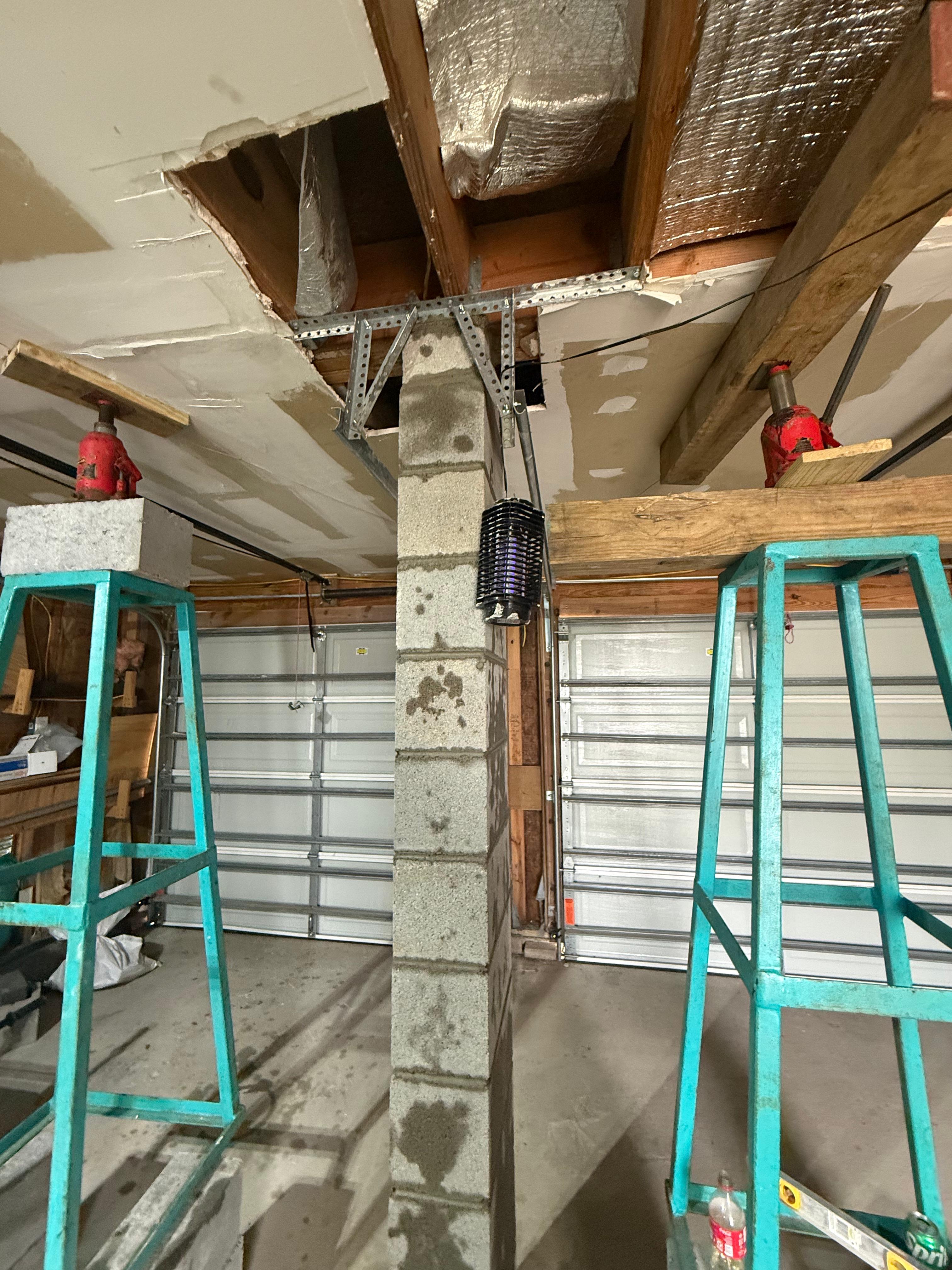
How Pier and Beam Foundations Work
A pier-and-beam foundation consists of three primary elements:
-
Piers — Vertical load-bearing elements set in or on the ground. In Texas Gulf Coast construction, piers are commonly concrete block (CMU), cast-in-place concrete, brick, or treated timber, depending on the construction era. Many Galveston homes feature original brick or stone piers dating to the early 1900s.
-
Sills (mudsills) — Horizontal beams that rest directly on the piers, transferring floor loads to the pier system. Typically, these are large-dimension treated lumber (4×6, 6×6, or 6×8), or, in older homes, untreated heart pine or cypress.
-
Floor joists — Secondary framing members spanning between sills, supporting the subfloor and finished floor above.
The crawl space — generally 18 to 36 inches in height — allows for inspections, repairs, and utility service access.
Why Gulf Coast Pier-and-Beam Foundations Settle
Several factors unique to the Texas Gulf Coast accelerate pier-and-beam deterioration:
High Humidity and Moisture Exposure
The Gulf Coast experiences some of the highest relative humidity levels in the continental U.S., with Galveston averaging over 75% relative humidity most of the year. Without proper crawl space ventilation and moisture barriers, this persistent humidity leads to:
- Wood decay fungi (brown rot, white rot) in beams and joists
- Subterranean termite activity — Galveston County remains in the highest-risk termite zone in Texas (USDA Termite Infestation Probability Zone #4)
- Corrosion of metal fasteners and anchor plates
Over time, this causes structural wood to lose its load-bearing capacity, resulting in soft, spongy, or sloping floors.
Soil Movement Under Piers
Much of the Houston area sits atop expansive Beaumont Clay soils, which swell and shrink with seasonal wet-dry cycles. This movement can lift and drop piers unevenly, leading to differential settlement — the classic cause of tilted floors and misaligned doors. On Galveston Island, sandy soils and fill can compact or erode, especially near the coast, causing piers to settle at different rates. As we move through hurricane season in 2026, be especially vigilant for erosion and water intrusion after heavy rains or tropical storms. Even if major flooding has not yet occurred, the threat of sudden weather events remains high along the Gulf Coast, and early repairs can help prevent more costly damage.
Inadequate Original Design
Many older Gulf Coast homes were built with piers spaced too widely or with insufficient embedment compared to modern standards. As soil shifts and building loads change, these original systems may no longer perform as intended.
TerraFirm’s Pier and Beam Leveling Process
Step 1: Crawl Space Assessment
Our experienced inspectors access the crawl space and methodically evaluate:
- Pier height measurements at each support point using digital levels and survey rods
- Beam and joist condition — visual inspection for decay, insect damage, and cracking
- Moisture evidence — standing water, staining, active decay, mold presence
- Existing vapor barrier — presence, condition, and coverage
- Pier condition — cracking, spalling, settling, or out-of-plumb piers
The result is a comprehensive written report with photos documenting every significant finding.
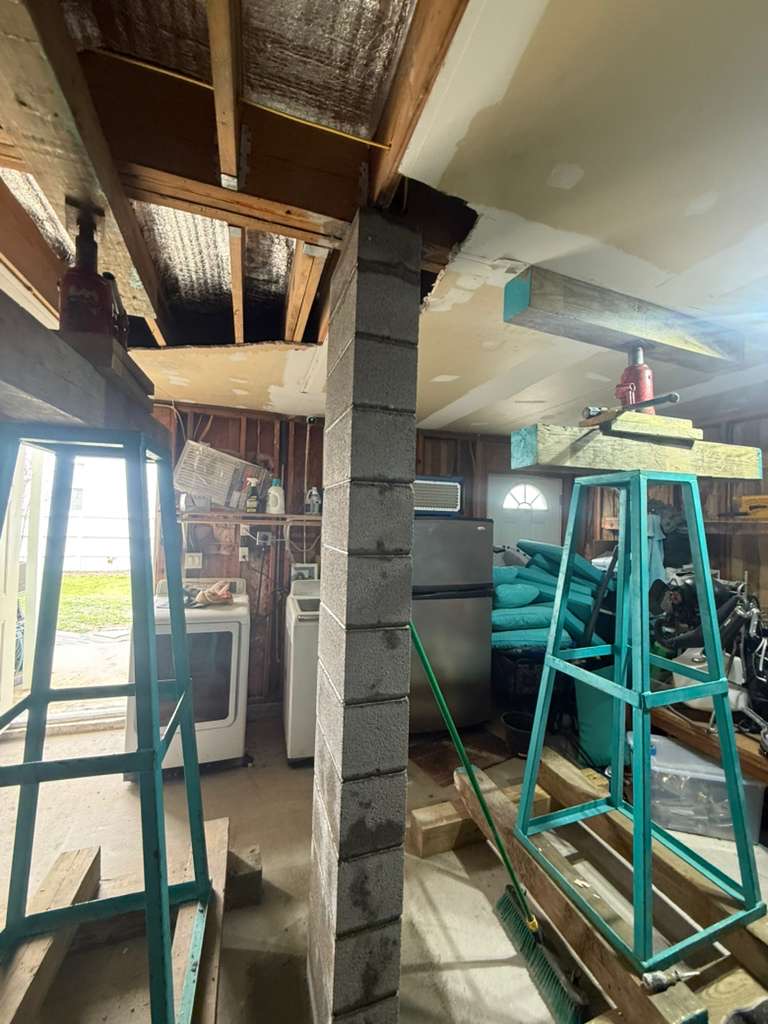
Step 2: Leveling Plan Development
Based on the assessment, we develop a scope-of-work that specifies:
- Which piers need shimming versus replacement
- Which beams need sistering or replacement
- Whether additional piers should be added to reduce span
- Moisture mitigation recommendations (vapor barrier, ventilation improvements)
Step 3: Beam and Pier Preparation
Before leveling, we address structural deficiencies:
- Sistering rotted or damaged beams — New pressure-treated lumber is bolted alongside deteriorated beams to restore full load capacity before any lifting occurs
- Replacing compromised piers — Failed piers are removed and replaced with new concrete piers, adjustable steel piers, or pressure-treated timber cribbing as appropriate
- Removing debris and standing water — We clear the crawl space of any debris or standing water that would interfere with work
Step 4: Leveling and Shimming
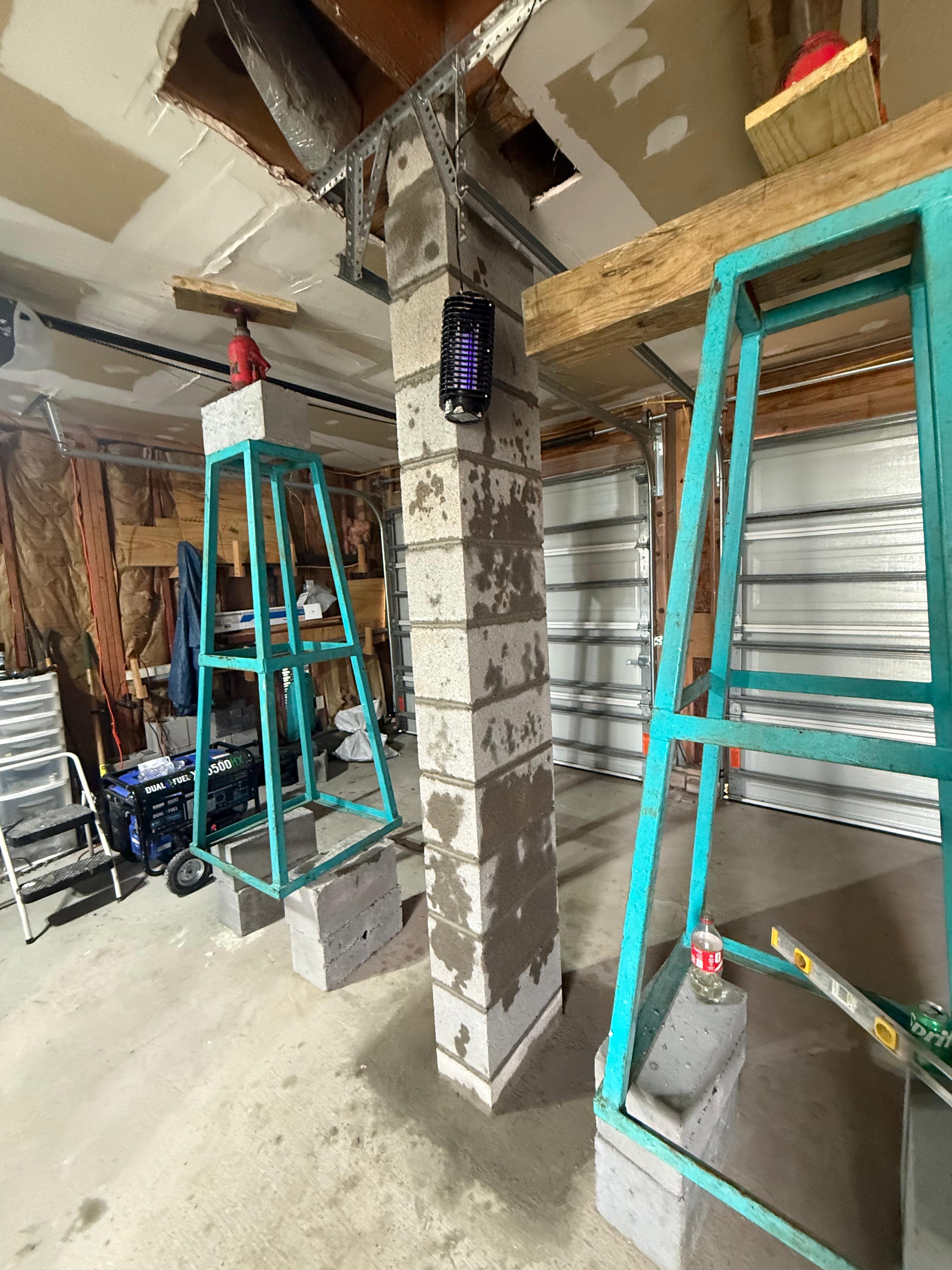
With the structure properly supported and deficiencies corrected, we systematically bring the floor system back to level:
- Steel shims are installed between piers and sills where settling has created gaps, raising low areas back to the target elevation
- Sister beams installed in Step 3 are adjusted to correct for deflection in damaged original framing
- Adjustable steel piers (where used) are locked at the correct height
Leveling proceeds in a planned sequence — never attempting to lift one area faster than adjacent areas can accommodate — to prevent racking stress in the floor and wall framing above.
Step 5: Moisture Protection
Following leveling, we install or repair moisture management systems:
- 6-mil polyethylene vapor barrier over the entire crawl space floor, with seams overlapped and edges turned up against piers and perimeter walls
- Ventilation assessment — adequate cross-ventilation is essential for long-term crawl space health; we identify and recommend solutions for inadequately ventilated crawl spaces
Pier and Beam vs. Slab: Which Is Better for Gulf Coast Homes?
This is a common question from Gulf Coast homeowners who are rebuilding, renovating, or comparing properties. Both foundation types have merit, and the best choice depends on site conditions, flood zone requirements, and budget.
Pier and beam advantages for Gulf Coast conditions:
- Elevates living space above grade, reducing flood damage exposure
- Crawl space allows easy access to plumbing, electrical, and HVAC systems
- Differential settlement is correctable without replacing the entire foundation
- Historic Galveston homes were built this way and can often be maintained at reasonable cost
Slab-on-grade considerations:
- Lower initial construction cost in many cases
- Suitable where BFE requirements can be met with fill and proper grade elevation
- More vulnerable to damage when flood waters breach the structure
- Leveling a settled slab requires different techniques (slabjacking or steel pier underpinning)
For existing pier-and-beam homes, leveling and maintenance is almost always more cost-effective than converting to slab construction. For new construction in Galveston’s flood zones, elevated pier foundations remain the standard approach recommended by FEMA and local building codes.
Frequently Asked Questions
How often should I have my pier-and-beam foundation inspected?
TerraFirm Leveling recommends professional crawl space inspections every 3 to 5 years for Gulf Coast pier-and-beam homes, or immediately following any major storm event. With hurricane season active in 2026, scheduling an inspection now can help catch issues before they worsen. Annual homeowner visual checks — looking for new floor slopes, binding doors, or visible crawl space problems — are also advisable.
How much does pier-and-beam leveling cost in Houston or Galveston?
For a standard Houston or Galveston pier-and-beam home, leveling projects typically range from $3,500 to $25,000 depending on the number of piers, amount of beam replacement needed, and crawl space conditions. Simple shimming jobs on well-maintained foundations are at the low end; projects requiring significant beam replacement and new pier installation are at the high end. TerraFirm Leveling provides free on-site estimates with transparent, itemized pricing.
Can you level a home while I’m living in it?
In most cases, yes. Pier-and-beam leveling work is done entirely from below, within the crawl space. Interior disruption is minimal — you may notice doors temporarily binding or releasing as the structure is adjusted, but most homeowners remain in the home throughout the process.
What warranty do you offer on pier-and-beam leveling?
TerraFirm Leveling warrants all leveling work against defects in materials and workmanship. Ask about specific warranty terms for your project during the estimate process.