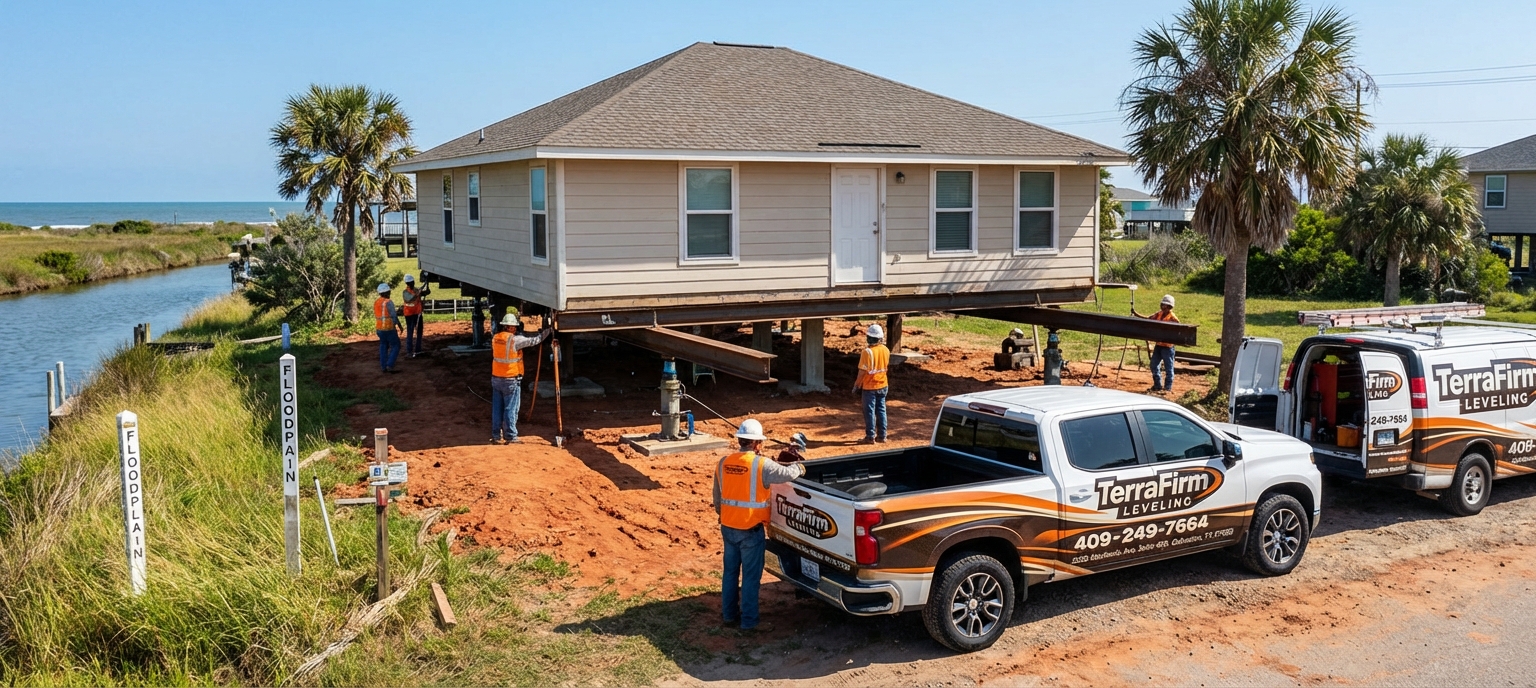
Why Elevate a Slab Home in Galveston?
Galveston and the Texas Gulf Coast are no strangers to flooding and hurricanes. With much of the area in designated floodplains, elevating slab homes is often necessary to protect property, lower flood insurance premiums, and comply with local and FEMA regulations.
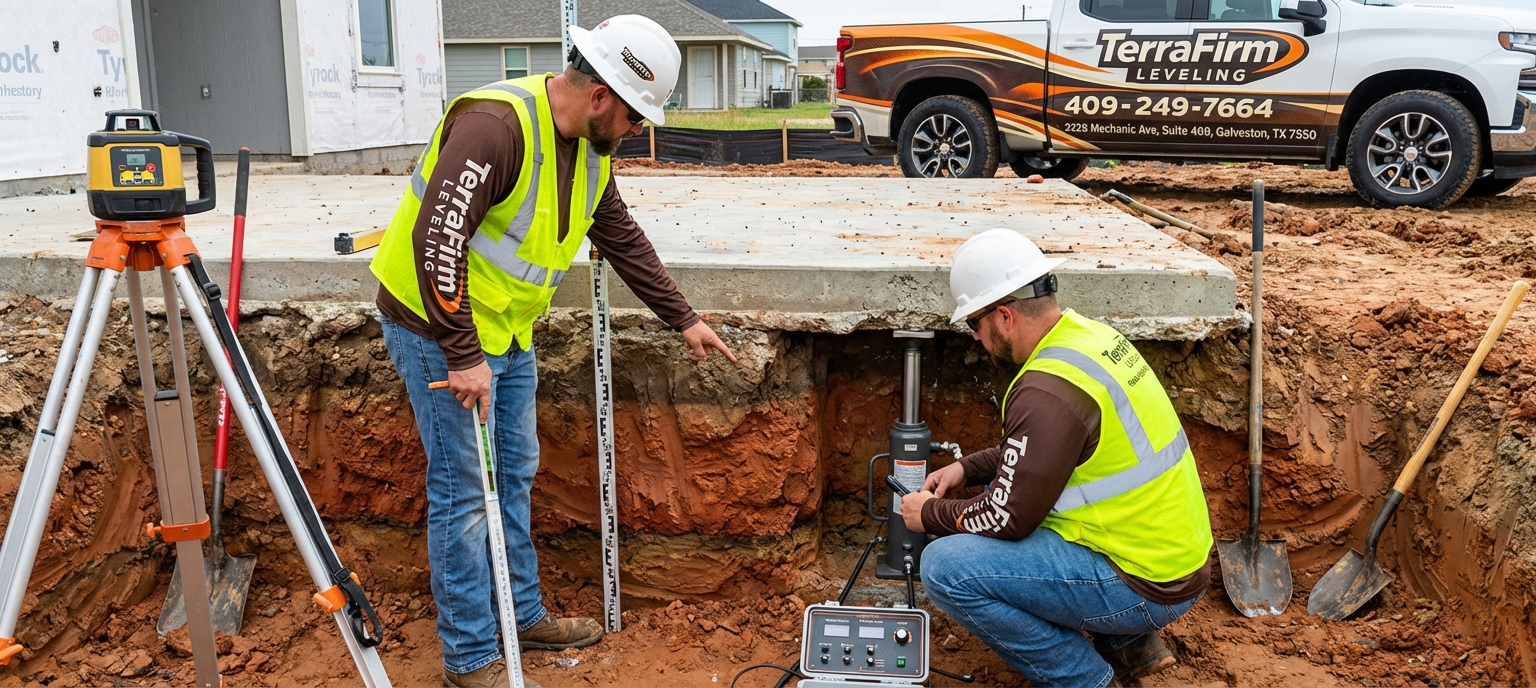
Understanding Galveston’s Coastal Clay Soils
Homes in Galveston are often built on expansive clay soils, which can shift and swell with moisture changes. This makes elevation projects more complex than in other regions. Specialized soil stabilization may be required to ensure a stable, long-lasting lift.
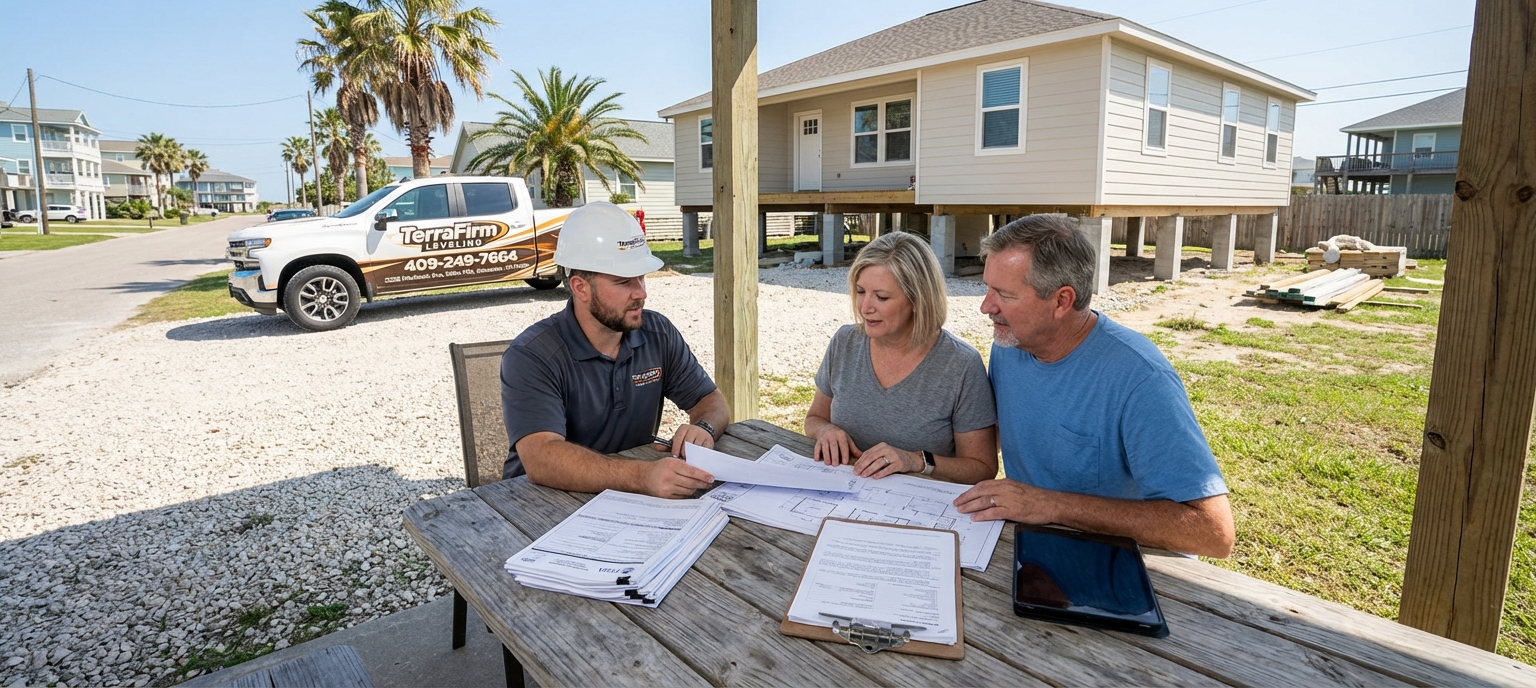
The Home Elevation Process for Slab Foundations
1. Site Assessment & Engineering
- Soil Testing: Local contractors will assess the clay content and stability of your lot.
- Structural Review: Engineers determine if your slab can be lifted as-is, or if reinforcement is needed.
2. Permitting & Compliance
- City of Galveston Permits: A building permit is required, with plans reviewed for floodplain compliance.
- FEMA Elevation Certificate: After the lift, a licensed surveyor must issue an updated certificate showing your new Base Flood Elevation (BFE).
3. Preparing the Home
- Disconnect utilities (water, sewer, gas, electric)
- Remove landscaping or porches as needed
4. Lifting the Slab
- Hydraulic Jacks: Contractors insert steel beams under the slab and use synchronized jacks to lift the entire structure.
- Piers or Pilings: After lifting, new concrete or helical piers are installed, often driven deep into the clay for stability.
- Soil Stabilization: In some cases, chemical injection or soil replacement is used to improve bearing capacity.
5. Reconnecting & Finishing
- Utilities are reconnected
- New stairs, porches, and access are built
- Final inspection and issuance of the elevation certificate
Floodplain Requirements & FEMA Elevation Certificates
Galveston County follows strict floodplain management regulations:
- Homes must be elevated above the local BFE, as determined by FEMA flood maps.
- An elevation certificate is required for insurance and to confirm compliance.
- Elevation must be performed by licensed contractors familiar with local soils and codes.
Local Storm Context: Why Elevation Matters
Historic storms like Hurricane Ike have shown the devastation flooding can cause in Galveston. Elevating your home not only protects your investment but is often required for rebuilding or major renovations in flood-prone areas.
Frequently Asked Questions
Q: How high do I need to elevate my slab home in Galveston?
A: The city requires homes to be at least one foot above the FEMA Base Flood Elevation (BFE) for your property. Your contractor or surveyor will determine the exact height.
Q: Can any slab home be elevated?
A: Most can, but some older or damaged slabs may need reinforcement or may not be suitable for lifting. A structural assessment is essential.
Q: How long does the elevation process take?
A: Typically 2-4 months from permit to completion, depending on size, soil conditions, and weather.
Q: Will my insurance rates go down after lifting my home?
A: In most cases, yes. Elevating above BFE can significantly reduce flood insurance premiums.
Q: Do I need a new elevation certificate after the lift?
A: Yes. A new FEMA elevation certificate is required to document your home’s new height and for insurance purposes.
Q: Are there local grants or funding to help with elevation costs?
A: Check with the City of Galveston and Galveston County for current grant programs, especially after major storms or FEMA disaster declarations.
Get a Local Estimate
If you’re considering elevating your slab home in Galveston or nearby Gulf Coast communities, consult a local, licensed contractor with experience in coastal clay soils and floodplain compliance. Contact us today for a free site assessment and personalized estimate.